scheelite, paravouxite, hematite, speryllite on this page and apatite, bournonite, cassiterite, celestite, dioptase, gold crystals, helvite, kovdorskite, rhodonite, stannite, wulfenite on the other A pages (price over $500)
|
|
|
|
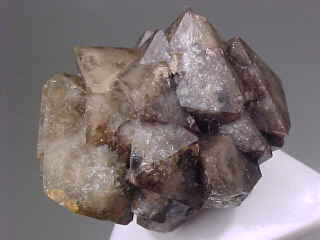
Siglo XX mine, Llallagua, Bolivia a 3.5 cm crystal form this outstanding locality; this size is quite exceptional for this mineral |
SOLD |
|
|
|
|
Animas-Chocaya district, Potasi Dept, Bolivia. One of the few specimens from a wurtzite pocket that produced the world's largest wurtzite crystals (like the wurtzite at the Harvard Museum) |
|
|
|
|
|
Pingwu, Sichuan, China. A crystal remarkable for its gemminess, color and size, on matrix. The left and right parts are not damaged but they may look that way on the monitor. Crystal is 6.5 cm top to bottom and matrix is 8 cm. . SOLD |
crystal shows excellent relief above the matrix: it is not "mostly embedded" |
|
|
|
|
Pingwu, Sichuan, China. An orange gemmy lustrous and undamaged crystal of Scheelite 3.5 cm next to a transparent fluorite crystal...with smaller scheelites and fluorites , all on matrix (whole 9 x 8 cm) . . SOLD |
To enquire or order E-mail us! Please ask us if interested in Scheelite, we may get more but it is expensive |
|
|
|
|
A number of tetrahedral crystals on quartz. Helvite is a rare beryllium mineral. Helvites here are to 2 cm, whole is 9 cm base and 7 cm tall; $520 |
|
|
|
|
|
To enquire about anything or order E-mail us! Hematites of this kind are really single crystals although they may at first appear to be numerous aligned crystals. Growth took place in directions along x, y and z axes, since it grew as magnetite. This 3-D nature is hard to show in a flat screen. The streak is red. About 5% of them retain magnetism indicating almost complete pseudomorphism. When magnetic, part of a crystal may be magnetic and another part not. |
Note on Hematite pseudos from Argentina: These are real pseudomorphs: they started off as magnetite as their external crystalline structure shows ... being deposited it is believed, from the vapor phase in a volcano (maybe as the volatile ferric chloride...recall that volcanoes often have HCl gas in their vapors). The iron-containing vapors then got hydrolysed in cavities and deposited magnetite. Some specimens show the octahedra of magnetite, some the 3D growth and some the hopperred structure which consists of the partial faces of magnetite with others overtaking them as a result of the fast growth from vapor. They eventually oxidised to hematite: the iron going from a combination of Fe2+ and Fe3+ in magnetite to all of it becoming Fe3+in Hematite. About 5% of them are still magnetic. Thousands came out in 2001 and 2002, mostly far smaller and not so well formed. We were given the greatly appreciated privelege of selecting what we wanted as a reward of helping with logistics of their preparation and marketing. They occur in pumice which had to be removed by careful work with HF (in which nobody apparently was injured indicating more skill than luck). We have other less expensive ones all hand-selected, on the relevant pages. |
|
|
|
|
|
|
|
|
|
|
|
|
|
|
|